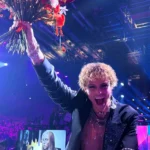


Alexander Rybak’s comments about refusing to boycott Melodi Grand Prix (MGP) have resurfaced across social media – and are now being used in a promoted campaign by the pro‑Israel organisation Med Israel for Peace (MIFF).
The Eurovision winner has faced a wave of criticism online after stating that he did not believe a boycott of MGP would have any impact on the ongoing war in the Middle East. Activists and commentators have accused him of showing indifference to Palestinian suffering, while others argue that his remarks have been misinterpreted and weaponised for political use.
Rybak Responds: «I Have No Right to Control It»
Nettavisen contacted Rybak to ask whether he approved of his image being used in MIFF’s advertising. In a text message, he distanced himself from any political affiliation but said he could not control how his public statements were circulated.
«As long as no one portrays me as an Israel activist, I have no right to control or censor which channels disseminate my words. MGP is a singing competition», he wrote.
When Nettavisen attempted to ask follow‑up questions – including whether he was aware of the campaign beforehand or had concerns about being associated with a pro‑Israel message – they were referred to his artist manager. Critics online have interpreted this as Rybak avoiding accountability, accusing him of lacking the «backbone» he previously praised in others.
A Debate That Shows No Sign of Slowing Down
The controversy highlights how Eurovision‑related discussions have become deeply entangled with global politics. As the conflict in Gaza continues, public figures are finding their statements scrutinised, repurposed and amplified in ways they may not anticipate.
For now, Rybak maintains that MGP is simply a music competition – but the online reaction suggests that, for many, Eurovision is anything but apolitical.