

MGP Final Explodes in Controversy as Only One Artist Dares to Oppose Israel’s Eurovision Entry
Norway’s Melodi Grand Prix has never seen a storm like this. In the tense run‑up to Saturday’s grand final, eight of the nine finalists have refused to take a clear stance on Israel’s participation in Eurovision 2026 — despite an unprecedented wave of boycotts across Europe.
While most artists dodge the question, offer vague comments about «culture», or decline to speak altogether, only one finalist has openly condemned Israel’s involvement.
Europe in Revolt: Five Countries Already Boycotting
According to VG, the backdrop to this year’s MGP is the most dramatic in the contest’s history.
Five nations — Iceland, Spain, Slovenia, Ireland and the Netherlands — have already announced they will boycott Eurovision in Vienna this May in protest against Israel’s participation, citing the ongoing war in Gaza and the expansion of settlements in the West Bank.
Skrellex Breaks Ranks: «A Country Committing Atrocities Has No Place on a Eurovision Stage»
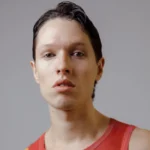
Artist Kai Thomas Larsen, known to MGP fans as Skrellex, is the only finalist willing to speak plainly. In an email to VG, he writes that a country engaged in large‑scale violence «has no place on a Eurovision stage, at the World Cup, the Olympics, or any other arena meant for celebration — not suffering».
Skrellex will open Saturday night’s show with «Into The Wild» on 28 February 2026, making his stance impossible to ignore.
Protest Movement Led by Marthe Valle
Singer and nurse Marthe Valle has been at the forefront of demonstrations against Israel’s participation for years. She has repeatedly argued that NRK should withdraw entirely from Eurovision until the conflict changes course.
URUvision: A Parallel Party for Viewers Who Switch Off NRK
In response to the controversy, activists have launched URUvision, described by VG as a «music celebration for those who want to turn off MGP on NRK but still gather for a night of music, joy and community».
Silence from NRK and Most Artists
NRK and the majority of MGP finalists maintain that Israel’s participation is not their responsibility — a stance critics call cowardly, given the humanitarian crisis dominating global headlines.
The debate now raging in Norway echoes a wider European question: Should a global entertainment show ignore a brutal conflict? Or does silence from broadcasters and artists risk normalising violence by pretending it isn’t happening?